AUPCTRE elects Eugene Manji as national president amid water privatisation debate
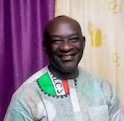
The election of Eugene Manji as National President of the Amalgamated Union of Public Corporations, Civil Service, Technical and Recreational Services Employees (AUPCTRE) has put the future of public utilities and workers’ rights back in focus, with civil society and faith-based organisations urging the new leadership to strengthen the union’s campaign against water privatisation.
Manji and other national officers were elected at AUPCTRE’s 7th Quadrennial National Delegates Conference in Kano State on 23 and 24 September 2026.
The election gives the union a new national leadership at a time when Nigeria is grappling with inadequate infrastructure, limited financing and questions over how essential public services such as water should be funded and managed.
The Federal Government has identified inadequate infrastructure, limited financing, rapid population growth, urbanisation, climate change and institutional fragmentation among the challenges facing Nigeria’s water sector.
It is also consulting states and other stakeholders on the Nigeria National Water Compact 2026–2030, which the government says is intended to provide a roadmap for improving water security.
What the new leadership means
Manji succeeds the previous national leadership after winning the delegates’ conference in Kano. Reports from the conference described the election as peaceful and said the new executives will serve for the next four years.
He will work with two National Deputy Presidents, Uzu Fidelis and Ibrahim Kirfi, alongside zonal vice-presidents and other national officers.
The other elected officers are National Vice President, Central Zone, Umaja Aloysius; National Vice President, Federal Zone, Adoga Abdullahi; National Vice President, Western Zone, Adebayo Adedoyin; National Vice President, South-South Zone, Joman Bernard; National Vice President, Eastern Zone, Bashir Chibuzo; National Vice President, North-West Zone, Samaila Abdullahi; and National Vice President, North-East Zone, Moses Helda.
Farotimi Olusoji was elected National Treasurer, while Rabiu Abdulrahman became National Secretary Finance. Rashila Alkali and Nnamachi Anthony were elected National Auditors.
The election was supervised by the Registrar of Trade Unions, according to the organisations that issued the statement.
Why water is central to the new administration
Water is one of the major areas where AUPCTRE has historically worked with civil society organisations.
The union has previously opposed proposals to introduce greater private-sector control into public water services. In 2024, AUPCTRE and the National Union of Electricity Employees reiterated their opposition to water privatisation and said they would work together on the issue.
AUPCTRE has also been involved in the wider “Our Water Our Right” campaign, which has challenged private control of water services in Lagos and called for stronger public investment and accountability.
In 2025, water justice groups, trade unions and Lagos policymakers also discussed public-public partnerships as an alternative approach to improving water services.
The debate is not simply about who operates water facilities. It affects the price, reliability and accessibility of water, the jobs of workers in public utilities and the amount of public accountability attached to essential services.
Research on Lagos’ water reforms has found that private-sector participation has been promoted partly on the grounds that it could attract investment, improve technical capacity and reduce inefficiencies. Water-rights advocates, however, have raised concerns about affordability and access for poorer households.
Groups congratulate Manji
Five organisations — Citizens Free Service Forum (CFSF), Renevlyn Development Initiative (RDI), Ecumenical Water Network Africa (EWNA), Environmental Defenders Network (EDEN) and Child Health Organisation (CHO) — welcomed the election.
CFSF Executive Director Sani Baba said:
“We are elated about the election outcomes. Comrade Manji has been in the trenches for years challenging impunity in the.delivery of public services.
“As he mounts the saddle, we believe that his team will inject vigor into the campaign against water privatisation and other public utilities and also sustain the peace and harmonious relationship between the union and civil society”.
RDI Executive Director Philip Jakpor said:
“The election of Comrade Manji and his team is well deserved. We are witnesses to how he has campaigned vigorously against the privatisation of water and other public utilities in Plateau State where he was state chairman of AUPCTRE.
“This good news is coming at a time that accountability and affordable access to public services is being systematically replaced with profit-driven motives that continue to burden low-income communities across Nigeria”
EWNA Coordinator Rev Kolade Fadahunsi said:
“We believe the new leadership of AUPCTRE led by Comrade Manji will continue to challenge the culture of successive governments that have turned essential human services into profit-driven commodities thus violating their moral obligation of equity and charity”.
EDEN Executive Director Chima Williams said:
“We congratulate AUPCTRE and the new leadership for a rancour free election which also exemplifies Comrade Manji’s leadership style. We anticipate he will continue agitating for transparent, efficient, and equitable public services that meet basic standards of welfare, safety, and dignity.
CHO Executive Director Lady Vicky Onyekuru said:
“The election of Comrade Manji and his team is an exciting development at this crucial time. He has been an advocate of people over profits and we anticipate he will continue to advocate against policies that disproportionately affect women and other vulnerable classes in our society”
The wider policy debate
The arguments over water privatisation come as governments face the cost of maintaining ageing infrastructure while trying to expand access to safe and affordable water.
The Federal Ministry of Water Resources and Sanitation said in February that more than 6,700 water schemes had been constructed or rehabilitated nationwide, while also identifying public-private partnerships as one of the mechanisms being considered for infrastructure development in other parts of the water sector.
That creates an important policy question for the new AUPCTRE leadership: how can governments raise the investment needed to improve public utilities without making essential services unaffordable or weakening public accountability?
There is no single answer to that question. Supporters of private-sector participation argue that it can bring capital and technical expertise, while opponents point to the risks of affordability, accountability and unequal access. Research on Lagos’ water reforms has highlighted both sides of that debate.
Recent developments in Lagos show why the issue remains relevant. Civil society groups have challenged proposed public-private arrangements involving water facilities and have called for greater transparency in procurement and decision-making.
What happens next
The new AUPCTRE leadership now faces the task of turning campaign positions into measurable action.
For workers, this will include how the union protects employment and working conditions as public utilities undergo reforms.
For water users, the key questions will be whether new investments improve reliability, whether services remain affordable and whether communities have meaningful access to information and decision-making.
For government, the challenge will be to demonstrate how its water-sector plans will translate into functioning infrastructure and wider access.
The effectiveness of the new AUPCTRE leadership will therefore be measured not only by the positions it takes, but by how it engages government, employers, workers and communities on the delivery of public services.
The election has changed the union’s leadership. The next test will be whether the new executives can turn their stated commitments on workers’ rights and public utilities into sustained engagement and measurable outcomes.